request to quote
Leave Your Message

What Are the Top 10 Battery Drain Tester Types for Buyers?

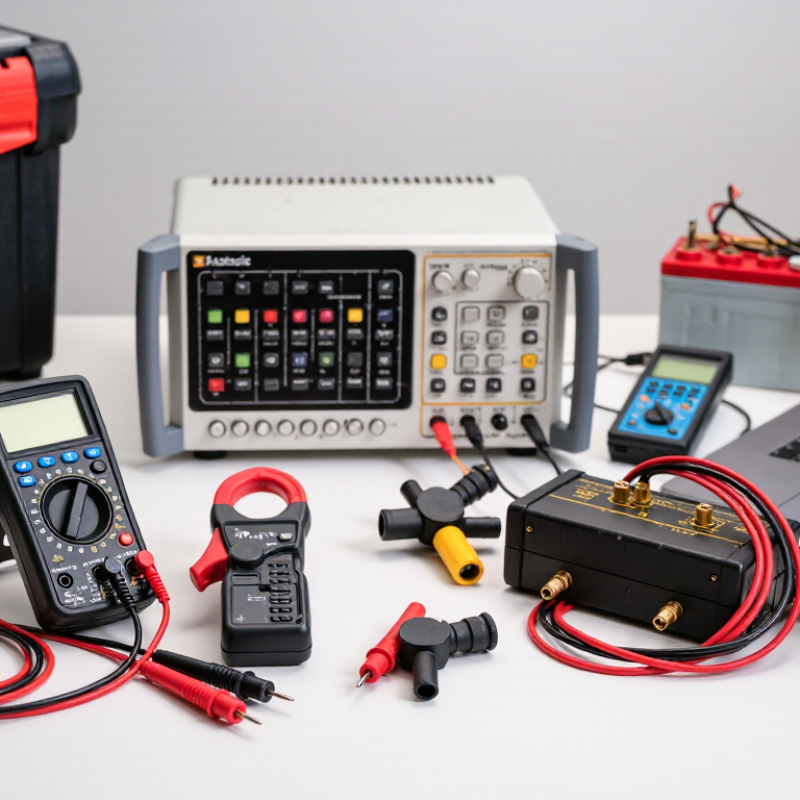
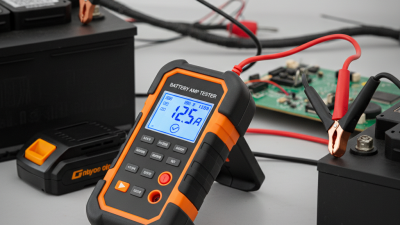
A weak battery can turn a quiet morning into a dead dashboard, a slow starter, and a missed appointment. Choosing the right Battery Drain Tester helps technicians and vehicle owners distinguish battery failure from parasitic draw, poor connections, or charging-system faults. The differences matter: a handheld conductance tester gives a quick health estimate, while a multimeter and current clamp can help trace a drain over time. No single tool answers every question.

Industry guidance helps define what reliable testing means. SAE J537 and IEC 60095-1 set out test methods and performance requirements for lead-acid starter batteries. Battery Council International’s annual industry reporting also tracks battery shipments, offering useful context for a large, established market. These sources do not rank tester types, so the comparison should focus on practical capabilities, test limits, and the evidence each tool provides—not marketing claims. A tester is not a magic wand.

Battery University founder Isidor Buchmann’s published guidance emphasizes evaluating a battery through appropriate testing rather than relying on a voltage reading alone. This introduction paraphrases that principle; it is not a verified verbatim quotation. The guide ahead compares ten common tester types, from basic load testers to clamp meters and data-logging tools. Expect trade-offs. A low-cost meter may spot a symptom, but diagnosis still depends on correct setup, vehicle conditions, and careful interpretation.

What Are the Top 10 Battery Drain Tester Types for Buyers?

Battery Drain Tester Fundamentals: CCA, Ah, Voltage, and Key-Off Current

Battery Drain Tester Fundamentals: CCA, Ah, Voltage, and Key-Off Current

A battery drain tester is only useful when its readings match the question being asked. Voltage gives a quick snapshot of charge, but it cannot confirm how much capacity remains. A rested 12-volt lead-acid battery often reads near 12.6 volts when fully charged; temperature and battery condition can shift that figure. Check the battery after charging and letting it rest. A reading taken just after a drive can mislead.

CCA, or cold cranking amps, estimates the current a battery can deliver at low temperature for engine starting. It is not the same as amp-hour capacity. Ah describes energy delivery over time, which matters for equipment running while the engine is off. Testers may use conductance or a controlled load, and their results are not interchangeable. Read the instrument’s instructions. Small detail, big difference.

Key-off current testing looks for power draw after the vehicle’s modules have gone to sleep. Set up the meter correctly, allow enough settling time, and avoid opening doors during measurement. A steady 30 milliamps may be ordinary for some vehicles, while a higher reading can point to a circuit that needs investigation. There is no universal cutoff. Record the value, wait, and compare again; one rushed reading can tell the wrong story.

Load and Conductance Testers: Compare CCA at −18°C Under SAE/EN Ratings

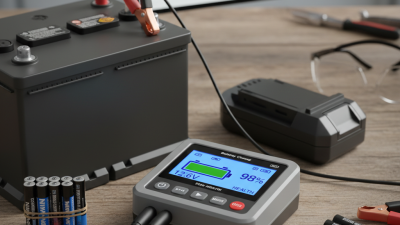
Among the top battery drain tester types, load and conductance testers answer different questions. A load tester applies a measured current and records how the battery voltage responds. Conductance testers send a small signal through the battery and estimate its condition from the response. Both can help assess starting ability, but neither should be treated as a perfect substitute for a controlled cold-cranking test.

CCA refers to current a fully charged battery can deliver at −18°C under a specified test procedure. SAE and EN ratings use different procedures, so compare readings only with the matching rating standard shown on the battery label. Check the tester’s selected standard, battery type, and rated CCA before testing. Small setting errors matter. A conductance reading is an estimate, while a load test gives a direct response under load; cold, charge level, and poor clamp contact can still affect results. Keep the posts clean, attach clamps firmly, and follow the tester’s instructions. Wait for the battery to rest after charging when practical. Results can be messy. If a reading conflicts with slow cranking or swelling, test again under suitable conditions and seek a qualified inspection.

Parasitic-Draw Meters and Clamps: Check Key-Off Current Against 20–50 mA Guidance

Among the top battery drain tester types, parasitic-draw meters and current clamps are especially useful for key-off diagnosis. They measure electricity flowing after the ignition is switched off. A healthy vehicle often settles near 20–50 mA, though specifications vary by model and equipment.

Wait for control modules to enter sleep mode. This may take several minutes. Open doors can wake the vehicle and distort the reading. A meter connected in series provides precise low-current measurements, but poor connections can interrupt memory systems. A current clamp measures around the cable without disconnecting it. It is quicker, but low-range accuracy matters greatly.

Reading the results

Small differences matter. A reading of 35 mA may be normal. A steady 180 mA deserves investigation. I have seen technicians blame a battery before checking the trunk lamp. That mistake wastes time. Check lighting, accessories, charging devices, and aftermarket wiring methodically. Record the current at five-minute intervals. Some vehicles wake briefly, so one snapshot can mislead.

Use a fused meter lead and avoid starting the engine through a series-connected meter. Clamps should be zeroed away from magnetic interference. In practice, the 20–50 mA range is guidance, not a universal rule. The service data remains the stronger reference.

Capacity and Discharge Analyzers: Interpret C20 Ah Ratings and Runtime

Capacity and discharge analyzers measure how much energy a battery can deliver under controlled conditions. A C20 rating describes capacity during a 20-hour discharge. For example, a 100 Ah battery rated at C20 is tested at about 5 A for 20 hours, until it reaches the specified cutoff voltage. Check the battery’s test conditions before comparing ratings. Different temperatures and cutoff limits can change the result.

Runtime depends on more than the label. A load drawing 10 A may not get exactly 10 hours from a 100 Ah battery, especially at higher discharge rates. The analyzer should apply a steady load, track voltage, and record elapsed time and delivered amp-hours. Watch the readings. A falling voltage near cutoff can shorten usable runtime, while an old or cold battery may perform below its published capacity. Keep connections clean and secure; loose clamps can distort results. I once treated a calculated runtime as a firm promise, which was a mistake. Real loads fluctuate, and test results are only useful when their conditions are noted.

What Are the Top 10 Battery Drain Tester Types for Buyers?

Capacity and discharge analyzers interpret C20 amp-hour ratings by measuring battery capacity at a controlled discharge rate.

This illustrative chart assumes a 100 Ah battery rated at C20, equivalent to 5 A for 20 hours. Ideal runtime is calculated as capacity divided by current; actual runtime can be shorter due to discharge-rate effects, temperature, battery condition, and the analyzer’s cutoff voltage. Common tester types include conductance testers, load testers, capacity analyzers, discharge testers, impedance testers, battery monitors, charger-analyzers, starter-battery testers, cell testers, and automated battery test systems.

Choosing Among 10 Tester Types: Match Measurement Range to Battery Chemistry

A tester is useful only when its range fits the battery. Lead-acid batteries, lithium-ion packs, and small alkaline cells do not respond to the same test method. Check the tester’s supported chemistry, voltage range, and maximum current before comparing features. A mismatch can produce a confident-looking number that means very little.

For lead-acid batteries, conductance testers, carbon-pile load testers, and hydrometers cover different needs. A hydrometer checks electrolyte specific gravity, so it suits serviceable flooded cells, not sealed batteries. Lithium-ion packs need compatible battery analyzers or capacity testers, with voltage and current limits suited to the pack. Internal-resistance meters can help assess condition, but readings vary with temperature and connection quality. Keep the contacts clean.

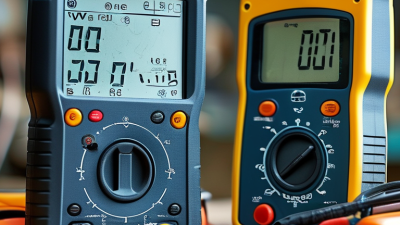
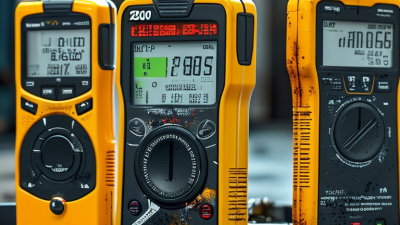
Other options include digital multimeters, battery impedance testers, discharge analyzers, clamp meters, and simple voltage testers. These are not interchangeable. A multimeter can confirm resting voltage, but it cannot prove usable capacity. A clamp meter measures current without opening a circuit, yet may miss brief changes. Small cells need low-current ranges; vehicle batteries require equipment designed for much higher loads. Read the specifications carefully. I have seen buyers focus on screen size and overlook the measurement range. That is an easy mistake. Test under consistent conditions, record the battery temperature, and compare results with the manufacturer’s limits when available.